Buy. Sell. Repeat.
Client
Minti
Year
2021
Category
E-commerce
Team
My role was lead product designer.
I worked with 2 other designers, product manager, developers and marketing.
About the project
Minti is a fashion resale startup for the sustainable fashion community and designers.
Business goal
Increase revenue, acquire customers and investors, ship MVP and brand recognition.
User goal
Make money, save money, independent shop, connect to sustainable fashion community.
Opportunity
Impact
Design a peer-to-peer social marketplace app for buyers and sellers of unique apparel and accessories, all in one place. Provide space for the sustainable fashion community to connect and collaborate.
First peer-to-peer social marketplace for fashion resale in Canada that increased sustainable fashion sales.
Local designers were given a spotlight which increased Minti's exposure and brand recognition.


Research insights
-
Nearly six out of 10 consumers are willing to change their shopping habits to reduce their environmental impact
-
Eight in 10 say sustainability is important to them
-
70% of those who say sustainability is very/extremely important to them would pay up to 35% more for brands that are sustainable and environmentally responsible.
-
Marketplaces need a system that can analyze product photos and create robust and accurate products tags and descriptions automatically.
-
Users have less patience for scrolling through rows and rows of irrelevant items online. Ensure key eCommerce functions — such as search and navigation — work flawlessly.
-
Competitive research - researched online fashion resale platforms like RealReal, threadUP and Vestiaire Collective.
-
Interviews - I interviewed customers of local second-hand stores and learned about the complicated process when selling items and dealing with staff.
-
Data analysis - I analyzed data from reports published by threadUP and discovered that there is a trend of fashion resale becoming more popular and viable as a business.
-
User stories - Working with product manager, we identified user stories and user segments that were important in informing design decisions.
-
Journey mapping - I mapped out the user journey to understand the process and milestones. These documents also helped with alignment and discussions with teams and product manager.
-
Low fidelity prototypes - I made paper prototypes to test and validate my ideas.
-
Wireframing - Once my ideas were validated I designed wireframes that were also tested before the final designs.


Selling storyboard
Buying storyboard
Search flow wireframes
Ideation
-
Based on research key features were designed: Selling, Buying, Search, Payment, Reviews, Social. I used storyboards to present to teams and get alignment. Quick illustrations are great for communicating a story and key interactions.
-
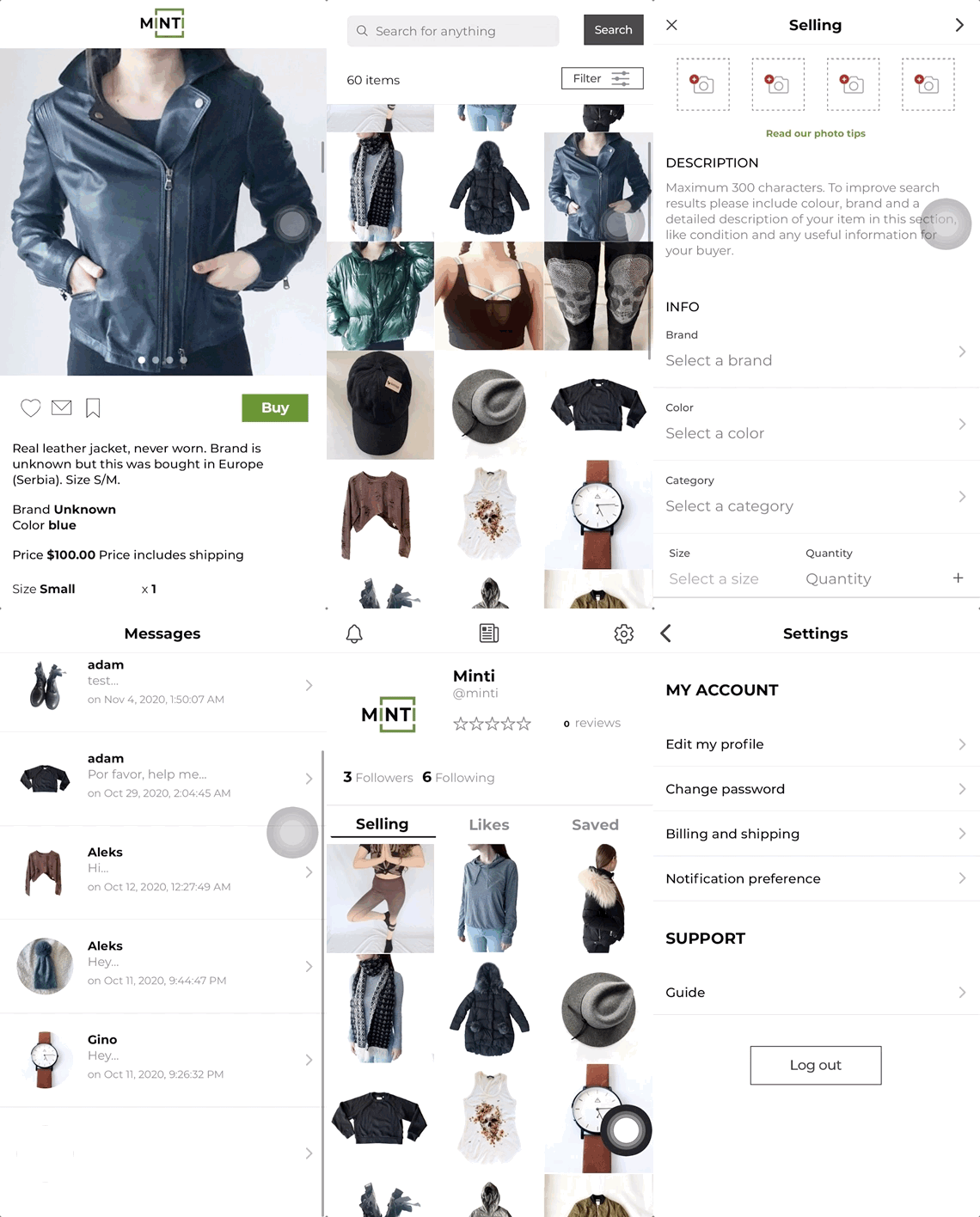
Search was the most important feature for the marketplace with detailed product description, advanced filters, simplicity and simple process.
-
Messaging, following, liking, saving and sharing feature with the community enabled engagement and connection.


Design
-
Search was designed with prominent photos and product information for easy discoverability. Advanced filters provided users with additional usability to find products they love. This was a key user goal.
-
Home page offered a selection of products that was tailored for users based on their preferences and likes.
-
Messaging connected people and helped facilitate sales and purchases. It was also a way for people to build a community.
Key learnings
-
Connecting to Stripe flow was presented too early and when users were not interested in setting up a Stripe payment account. There was no incentive and Stripe onboarding had a bad user experience.
-
Users were not familiar with Stripe, mostly PayPal.
-
Adding a category for local sustainable designers is a feature that would invite more local designers.
Impact
-
Minti was the first local peer-to-peer social marketplace to address the need for fashion resale and sustainability. (Business Goal)
-
Minti acquired new customers and support from the fashion community. (Business Goal)
-
Local designers were given a spotlight on social media which increased Minti's exposure and brand recognition and provided exposure to user products for sellers. (User + Business Goal)
-
Social features and the Shop increased user's product visibility which increased revenue for users. (User Goal)